
NeuroAware

Neurodivergent Support

Whether you're seeking clarity about your neurodivergence or looking for personalised strategies to navigate daily life, we're here to help you understand yourself and thrive.

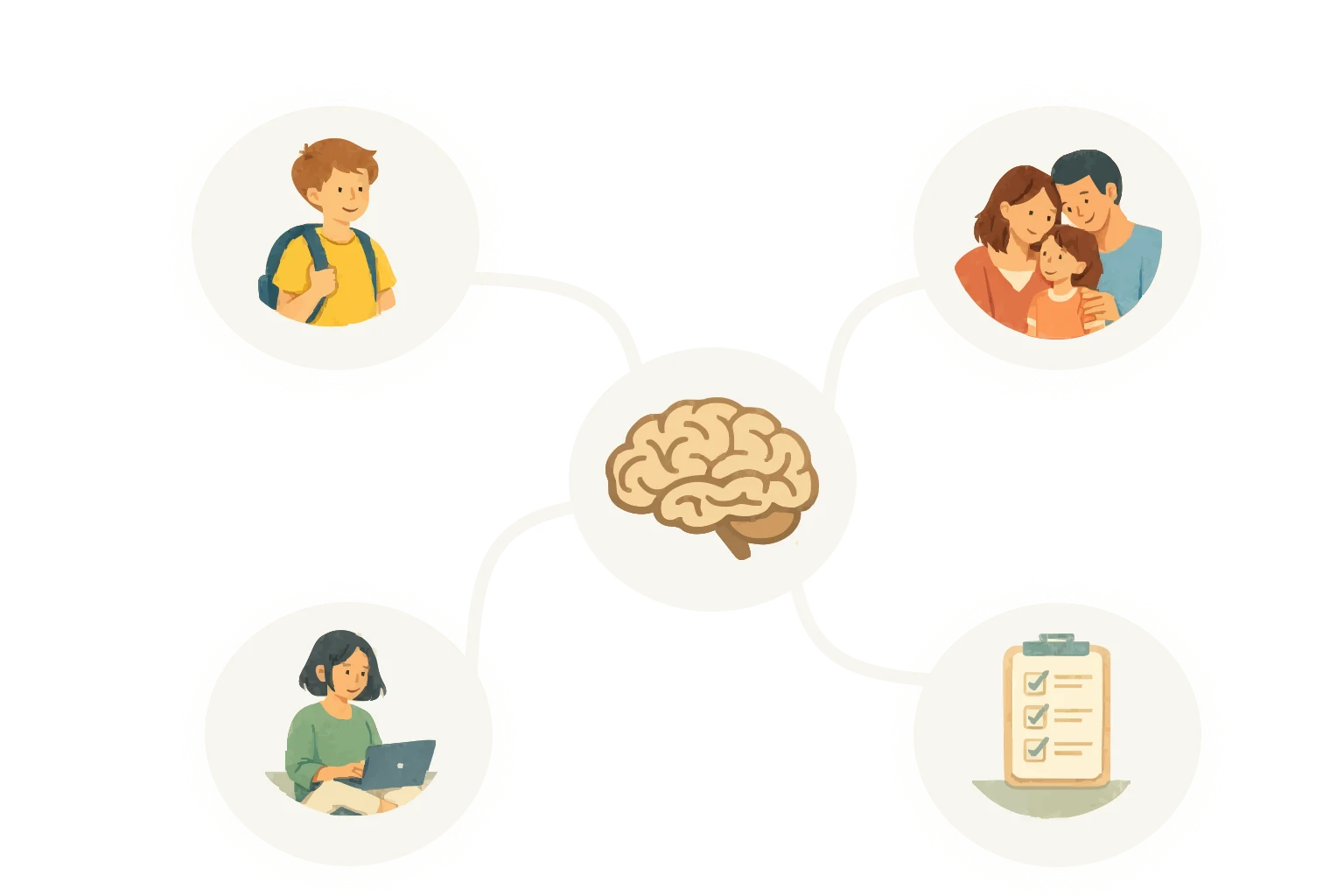
Illustration of neurodivergent support areas branching from a central brain icon

A place to make sense of things

This support is for people who are trying to understand themselves more clearly, whether you are diagnosed, self-identifying, waiting for assessment, or simply starting to notice that old explanations no longer fit.

The aim is not to change who you are. It is to help daily life feel less confusing, less draining, and more workable.

Together, we can look at patterns, stress points, sensory load, burnout, communication, routines, relationships, and the adjustments that might actually help in real life.

Support we can help with

The work is shaped around what feels most useful now, not a fixed programme you have to squeeze yourself into.

Understanding your patterns

Explore traits, sensory needs, stress points, masking, burnout, communication, and the support that may help day to day.

Practical daily-life support

Talk through routines, relationships, work, study, appointments, services, and everyday challenges without judgement.

Diagnosis and identity

Make sense of a diagnosis, self-identification, waiting for assessment, or finally having language for your experiences.

Benefits, services and signposting

Get clearer about support routes, forms, local services, employment support, and what might be worth exploring next.

What we might explore together

1

Energy and capacity

Understanding burnout, shutdown, recovery, and the early signs that life is asking more than you can sustainably give.

2

Sensory and emotional regulation

Working out what helps you feel safer, steadier, and less overloaded without treating your needs as an inconvenience.

3

Executive function and demand

Finding kinder ways to approach organisation, transitions, decisions, routines, and tasks that look simple from the outside.

4

Communication and self-advocacy

Building clearer language for needs, limits, adjustments, and boundaries while protecting your sense of self.

Questions people often ask

Do I need a formal diagnosis to access support?

No. You do not need a formal diagnosis to be taken seriously here. We can work with your lived experience, questions, patterns, and needs as they are now.

Is this for adults or young people?

Support can be shaped for adults and young people. For younger clients, the right involvement from parents or carers can be discussed so the support still feels respectful and useful.

Will this be practical, or just talking?

It can be both. Some sessions may focus on making sense of things; others may leave you with clearer language, next steps, adjustments, or ways to reduce daily load.

Are sessions held online or in person?

Currently, support sessions are held online via secure video call. This can offer more flexibility and may feel calmer or more sensory-safe for many people.

What if I find it hard to explain what I need?

That is completely okay. Part of the work can be gently finding words for what has felt tangled, hidden, or difficult to name.

Ready to get the support you deserve?

Whether you need guidance, advocacy, or just someone who understands, we're here to help you move forward with clarity and confidence.

For community updates, local news, and upcoming events, join the Facebook group.