
10 Essential Tips for Supporting Neurodivergent Children

Neurodivergent Support
"Practical, evidence-based strategies to help neurodivergent children thrive at home, school, and in daily life."
Supporting Neurodivergent Children
Supporting neurodivergent children - whether autistic, ADHD, dyslexic, or otherwise - doesn’t require specialist training. It requires understanding, flexibility, and strategies that work with their brains, not against them.
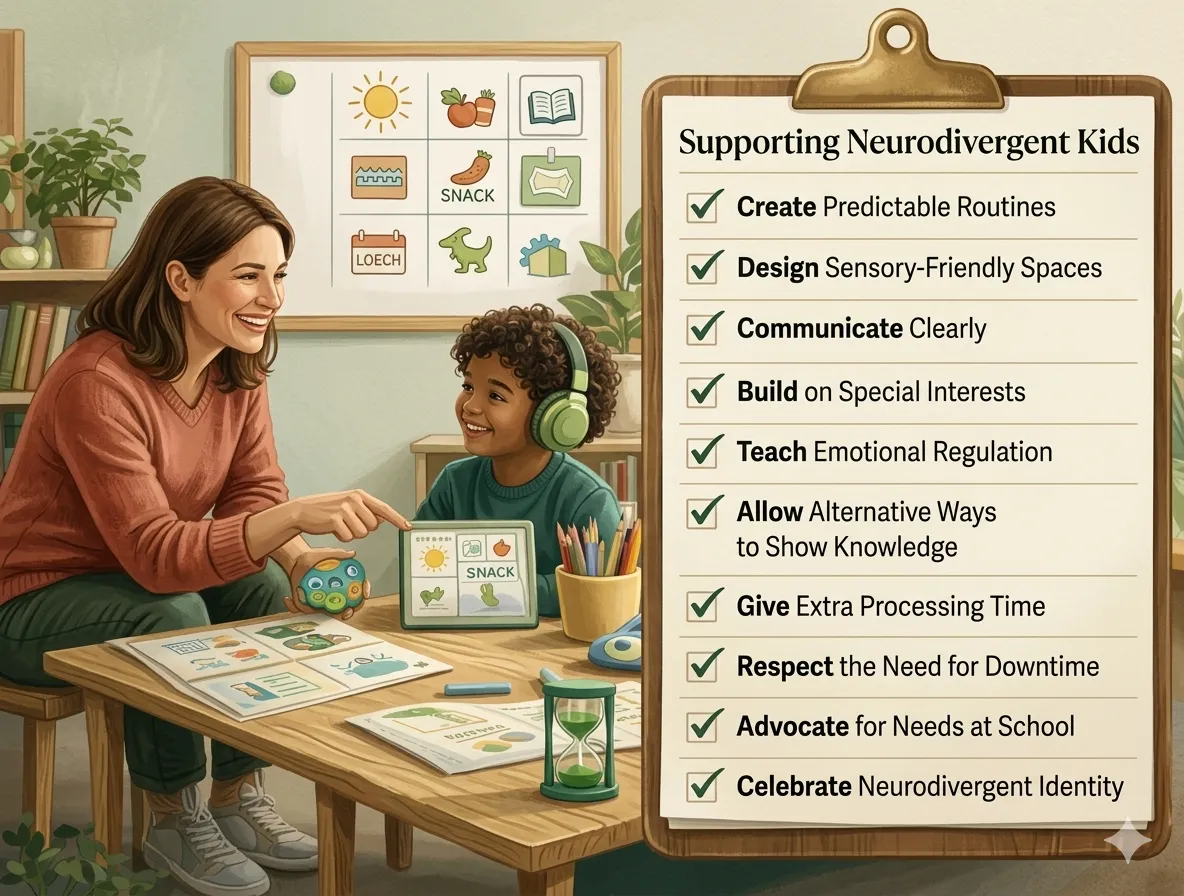
Here are 10 evidence-based ways to help right away.
1. Create Predictable Routines (With Flexibility)
Predictability reduces anxiety and frees up energy for learning.
Try:
- Visual timetables (pictures + words)
- 10- and 5-minute transition warnings
- Consistent daily anchors (morning, meals, bedtime)
- Occasional “planned surprises” to build flexibility
“Visual schedules reduce the cognitive load of figuring out what’s next.”
2. Design Sensory-Friendly Spaces
Children may be over- or under-sensitive to sound, light, touch, or movement.
Create:
- Calm corner: soft lighting, beanbag, headphones, fidgets
- Movement space: jumping, pushing, carrying
- Quiet zone: low-stimulation area for focus
Quick wins:
- Swap harsh lighting for warm/natural light
- Allow movement (standing, rocking, walking)
- Offer fidgets instead of banning them
3. Communicate Clearly and Literally
Avoid vague or implied language.
Instead of → Say
- “Maybe later” → “We’ll do it tomorrow after lunch”
- “Be good” → “Use gentle hands with the dog”
- “Why did you do that?” → “I see you threw the toy. Let’s find a safe place to throw”
Rule: Be clear, specific, and consistent.
4. Build on Special Interests
Special interests are powerful learning tools - not distractions.
Use them to:
- Motivate tasks
- Teach broader topics
- Build confidence and expertise
- Support social connection
Interest-based learning increases engagement and reduces anxiety.
5. Teach Emotional Regulation Explicitly
Emotional skills often need to be taught directly.
Helpful tools:
- Emotion charts (faces + body cues)
- Zones of Regulation
- Social stories
- Coping strategy lists
Remember: Meltdowns = overwhelm, not misbehaviour. Support first, teach later.
6. Allow Different Ways to Show Learning
Written work isn’t the only valid output.
Alternatives:
- Speaking or video
- Models or hands-on projects
- Drawings, diagrams, mind maps
- Demonstrations
Principle: Same learning, different expression.
7. Give Processing Time
Extra time is often essential - not optional.
Try:
- Wait at least 10 seconds after asking a question
- Give questions in advance
- Allow written responses
Avoid interrupting - it resets their thinking.
8. Respect the Need for Downtime
Social and sensory demands are exhausting.
Downtime might include:
- Being alone in a quiet space
- Engaging in special interests
- Screen time (often regulating)
- Stimming (rocking, flapping, etc.)
Never remove regulation tools as punishment.
9. Advocate at School
Schools often want to help - but need guidance.
Know the system (UK):
- EHCP (legal support plan)
- SEN Support (school-based help)
- Reasonable adjustments
Tips:
- Keep communication in writing
- Focus on needs, not labels
- Bring support to meetings
- Stay collaborative but firm
10. Celebrate Neurodivergent Identity
The goal isn’t to “fix” - it’s to support thriving.
Support identity by:
- Respecting preferred language
- Sharing positive role models
- Connecting with community
- Talking openly about strengths and challenges
Neurodiversity is something to understand and value - not erase.